Wood Decay in Trees
Wood Decay in Trees
-
White Rot:This decay is caused by fungi that break down both cellulose and lignin, leaving behind a soft, stringy, or spongy material that is often a light color.
-
Brown Rot:This type attacks the cellulose, leaving the wood with a brown, brittle, and crumbly texture
-
Soft Rot:
Caused by fungi and bacteria, soft rot breaks down cell walls and materials, though it is generally a slower process than white or brown rot.
-
Wounds:
Decay fungi primarily enter trees through wounds, which can be caused by construction, logging machinery, or even routine lawn care like mowing and trimming, notes Ever-Green Tree Care and this University of Kentucky document.
-
Root grafting:
Root rot can spread from one tree to another through root grafting, leading to a dieback of the roots.
-
Moisture:
Fungi that cause decay require prolonged periods where the wood’s moisture content is high (typically above 20−25%
20−25%). -
Buried wood:
Wood that is buried or covered by soil changes, like with grading, is more susceptible to decay because the bark barrier is broken.
-
Swelling:
A swelling or “bottle butt” at the base of a tree can indicate that the tree is responding to internal decay by forming reaction wood
-
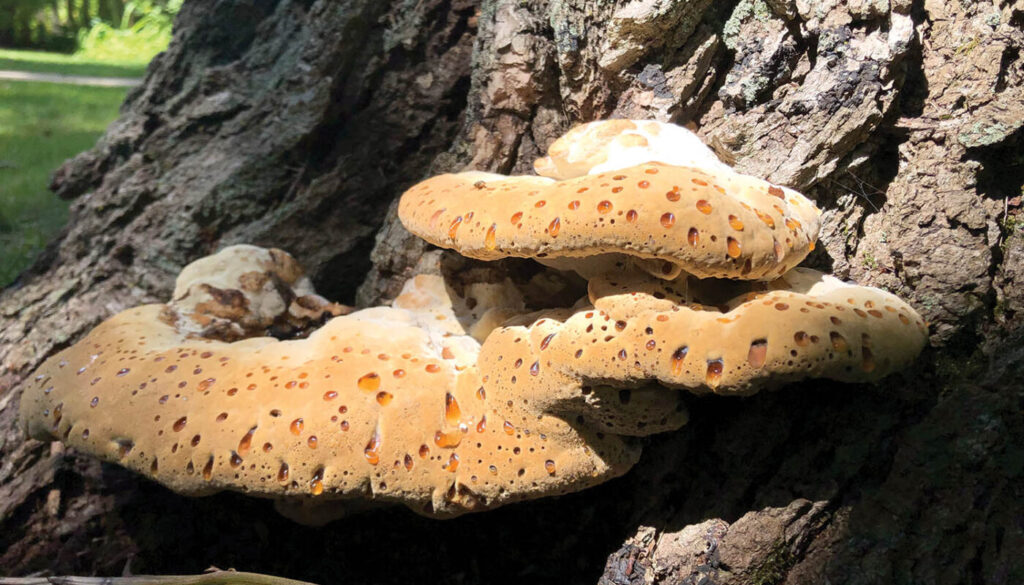
Fruiting bodies:
The presence of fungi, such as mushrooms, on the trunk or at the base of a tree is a direct sign of a decay-causing infection.
-
Changes in wood texture:
Decayed wood will have different properties. White rot makes wood soft and spongy, while brown rot makes it brittle and crumbly
-
Cavities:
While not all cavities are a major problem, large ones can indicate a significant amount of internal decay.
-
For minor wounds:
Often, the best course of action is to do nothing, as the tree can seal over a small wound on its own, says The Morton Arboretum.
-
Prevention:
Avoid damaging trees with lawnmowers and string trimmers, and take precautions to minimize damage during construction.
-
Professional assessment:
For extensive decay or large cavities, it is best to consult a professional arborist for a diagnosis and to assess the risk of failure.
Contact Johnson Ops Tree Care for a PHC evaluation of your trees. One of our Certified Arborist would be glad to meet with you and discuss your trees and get a plan of action if needed.