Pine Tortoise Scale
Pine Tortoise Scale
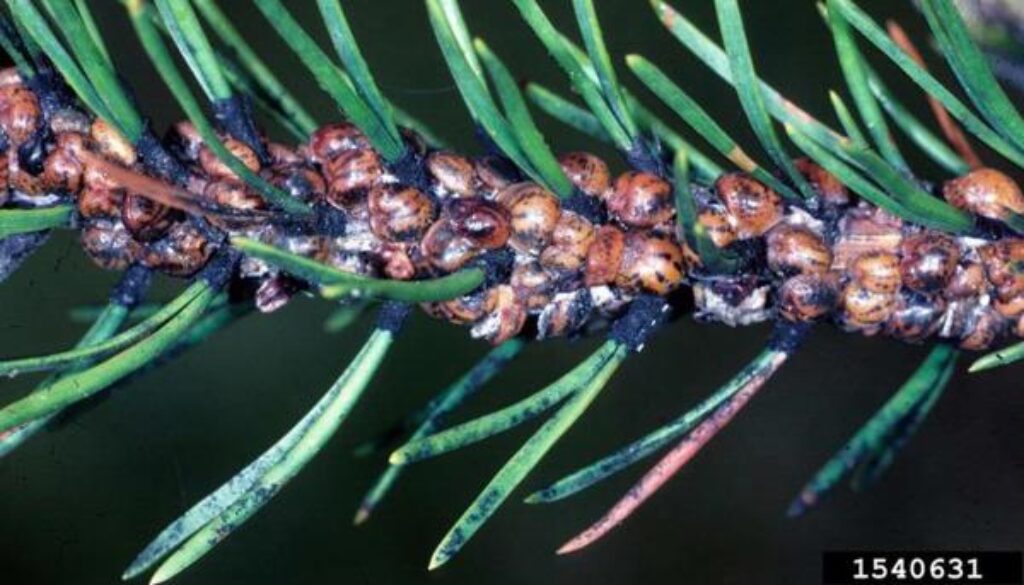
Pine Tortoise Scale (Toumeyella parvicornis) is found in Wisconsin and is considered a pest of pine trees, particularly impacting young plantations, Christmas tree farms, and seed orchards. Infestations lead to reduced tree growth, impaired appearance, and can even cause tree mortality. The scales secrete honeydew, which promotes the growth of sooty mold, making infested branches look black and decreasing the commercial value of trees.
-
Host Trees:
Primary hosts in Wisconsin include jack pine (Pinus banksiana) and Scots pine (Pinus sylvestris), though it can infest other pines as well.
-
Symptoms:
- Sooty Mold: A dark, black coating on branches and needles from the sooty mold.
- Stunted Growth: Impaired growth and vigor in infested trees.
- Death: In severe cases, especially on young trees, heavy infestations can lead to tree death.
- Honeydew: A sticky, sweet substance excreted by the scales.
- Sooty Mold: A dark, black coating on branches and needles from the sooty mold.
-
Horticultural Oils:
Apply after the crawlers settle to suffocate them.
-
Insecticidal Sprays:
Use products with systemic activity or long residual effects during the crawler stage (typically late spring/early summer).
-
Biological Control:
Ladybird beetles that feed on pine tortoise scale eggs and crawlers can help manage populations.
-
Dormant Oil:
Applying dormant oil in late winter can kill overwintering females before they lay eggs.
-
Scout for the scale:
Check young pine trees, plantations, and Christmas tree farms. Look for the dark, dome-shaped scales on shoots and needles and the associated sooty mold.
-
Consult a professional:Contact Johnson Ops Tree Care for a Plant Health Care (PHC) consultation. One of our specialists will be delighted to meet with you, assess your trees, and develop a plan for their care.