Is it Advisable to Stake my New Tree?
Is it Advisable to Stake my New Tree?
Is it Advisable to Stake my New Tree? Proper planting techniques play a significant role in determining whether a young tree will require staking. In most cases, when trees are planted correctly, their root systems are robust enough to provide the necessary support for both their size and weight. This natural stability often eliminates the need for additional staking.
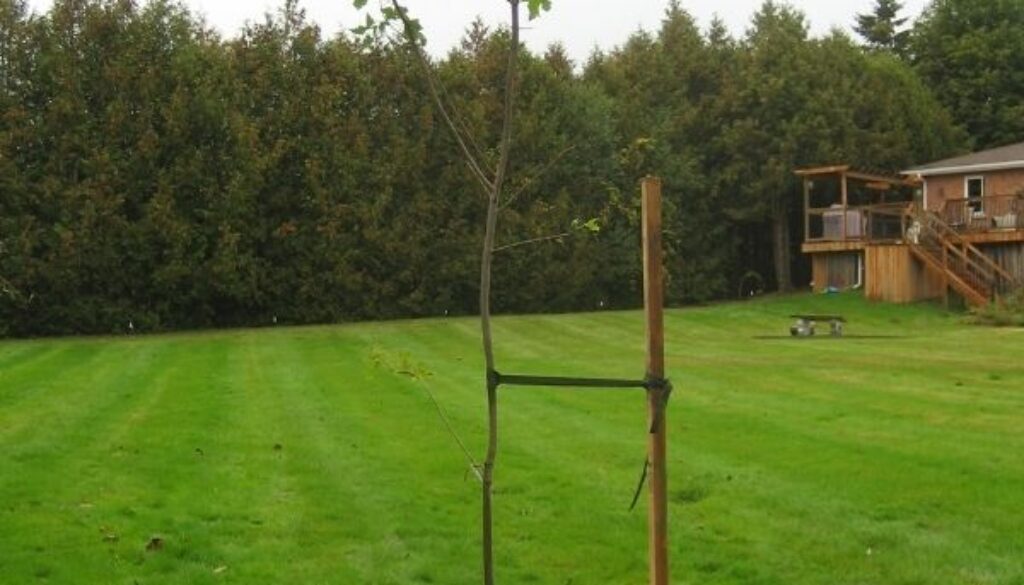
However, there are situations where staking becomes necessary. If a young tree’s roots are not yet sufficiently developed to stabilize the stem and canopy, staking can serve as a temporary measure. By using stakes, it is possible to prevent the tree from bending excessively and to help keep it upright while its roots continue to grow and establish.
It is important to note that research has shown trees typically establish themselves more rapidly when staking is avoided. Therefore, staking should be viewed as an intervention used only when absolutely necessary, rather than as a standard practice for all newly planted trees.
Considerations for Staking Based on Planting Site and Location
Staking is often necessary in specific planting environments. Trees planted in areas exposed to strong winds, especially in wide open spaces without nearby trees to act as windbreaks, may benefit from staking to maintain stability. Windy sites are particularly vulnerable because the lack of natural barriers increases the likelihood of the tree being bent or uprooted.
In addition to wind, planting sites with heavy pedestrian traffic pose risks to young trees. Frequent movement of people around the area can result in accidental contact, causing the tree to be jostled or knocked. In such cases, staking helps protect the tree from unintended disturbance.
When to Remove Stakes from Newly Planted Trees
It is important to regularly inspect any stakes or guy wires used to support newly planted trees. The purpose of these supports is to protect the tree, but if they are not checked periodically, they can inadvertently cause harm. Make sure that the materials used are not rigid or abrasive, as these can rub against the trunk, dig into the bark, and result in injuries to the tree.
After the tree has been in the ground for one year, remove all staking and ties. By this point, the root system should be established enough to provide adequate support for the tree. Additional staking is usually unnecessary and can hinder the tree’s natural development.
Are you considering adding new trees to your landscape? Visit Johnson Ops Tree Care to explore our Legacy Tree selection. Alternatively, you can call us for a New Tree Consultation with one of our Certified Arborists.