Hypoxylon Canker
Hypoxylon Canker
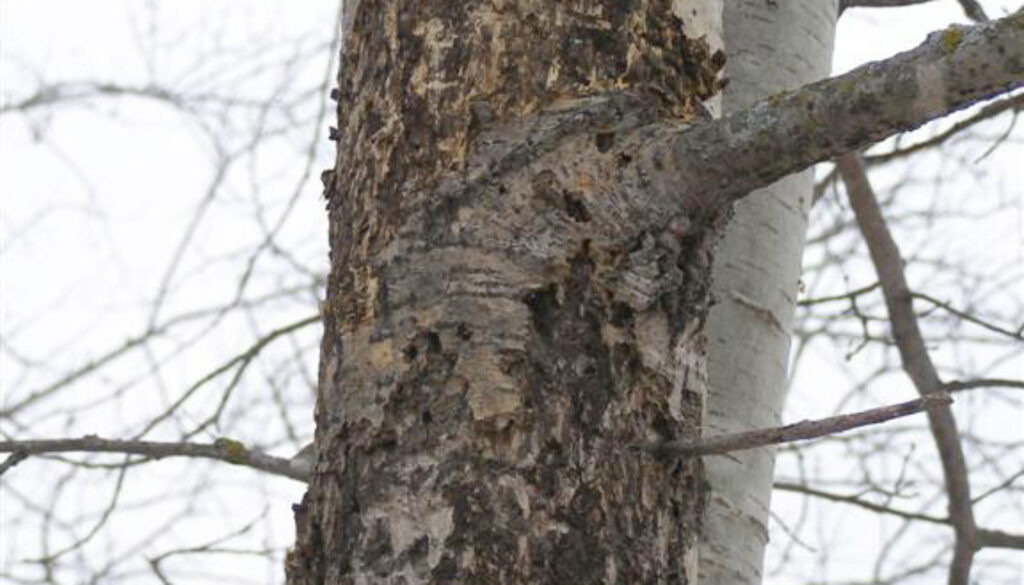
Hypoxylon canker is a serious disease of aspen and other trees, often killing stressed or weakened trees.It’s characterized by the appearance of large, black or grey, spore-bearing mats (stromata) on the bark, usually in areas affected by drought or other severe stress. There is no direct treatment for the fungus once symptoms appear; however, managing tree health by watering and preventing stress can help, and pruning out infected branches can prevent further spread in less severe cases.
What is it?
- Hypoxylon canker is caused by a fungus that attacks aspen and poplar trees.
- It typically becomes a problem in trees that have been weakened by environmental stress, especially drought.
How to identify it:
- The most distinctive sign is the appearance of large, dark, powdery mats (stromata) on the bark. These may be grey or black and are produced as the fungus spreads under the bark.
- The bark may also appear sunken or diseased.
What to do about it:
- Remove dead or dying branches: Pruning out diseased limbs can help control the spread of the canker.
- Improve tree health: Water the tree during dry periods and avoid other stressors like mechanical injury to its trunk or roots.
Consult a professional: For significant cankers on the trunk, a Certified Arborist can provide a proper diagnosis and recommend appropriate care, though treatment for severe cases is often limited.
Key things to remember:
- Healthy trees can host the fungus without damage.
- Symptoms are often a sign of severe stress, meaning the tree may already be too far gone.
- Focus on preventative measures, such as watering and good tree care, to keep your aspen healthy and more resistant to the fungus.
If you have any worries about the health of your trees, don’t hesitate to reach out to Johnson Ops Tree Care. One of our Certified Arborists is here to address any inquiries you may have about your trees.