Not Your Average Mistletoe
Not Your Average Mistletoe
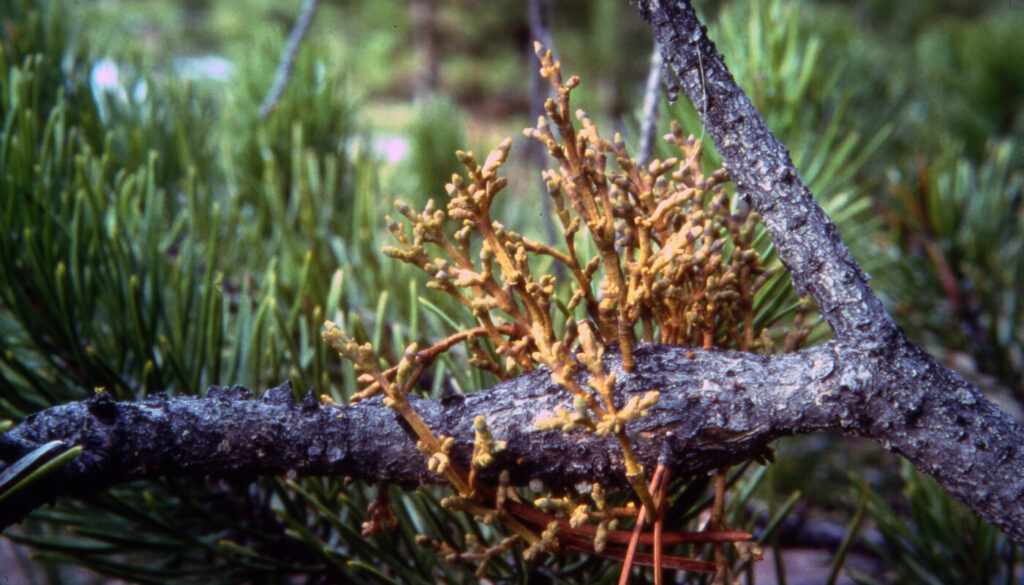
Not Your Average Mistletoe. Eastern dwarf mistletoe (Arceuthobium pusillum) is a small but highly destructive parasitic plant that primarily affects spruce trees across northern regions, including parts of Wisconsin. Despite its tiny size, this plant can have a major impact on tree health, often going unnoticed until significant damage has already occurred.
Unlike traditional plants, Eastern dwarf mistletoe attaches itself directly to its host tree and draws water and nutrients from it. Over time, this weakens the tree, slowing growth and making it more vulnerable to other pests, diseases, and environmental stress. One of the most noticeable signs of infection is the formation of “witches’ brooms”—dense clusters of abnormal branch growth that can distort the tree’s natural shape.
This parasite spreads in a fascinating but aggressive way. Its seeds are forcibly ejected from the plant and can travel several feet, sticking to nearby branches and starting new infections. Because of this, mistletoe can quickly spread through a stand of susceptible trees if not properly managed.
In Wisconsin landscapes, Eastern dwarf mistletoe most commonly affects black spruce, though it can occasionally be found on other spruce species. Infected trees may show reduced vigor, thinning needles, and branch dieback over time. Severe infestations can eventually lead to tree death.
Management options are somewhat limited. Pruning infected branches can help slow the spread if caught early, but in more advanced cases, full tree removal may be necessary to protect surrounding trees. Prevention and early detection are key to maintaining a healthy landscape.
At Johnson Ops Tree Care, we help homeowners identify hidden threats like dwarf mistletoe before they become serious problems. If you’ve noticed unusual growth patterns or declining spruce trees in your yard, our Certified Arborists are here to help assess the situation and recommend the best course of action
Products Available: Mulch • Dirt • Compost • Landscaping Rock • Live Edge Slabs • Lumber • Trees•Firewood