Cedar-Apple Rust
Cedar-Apple Rust
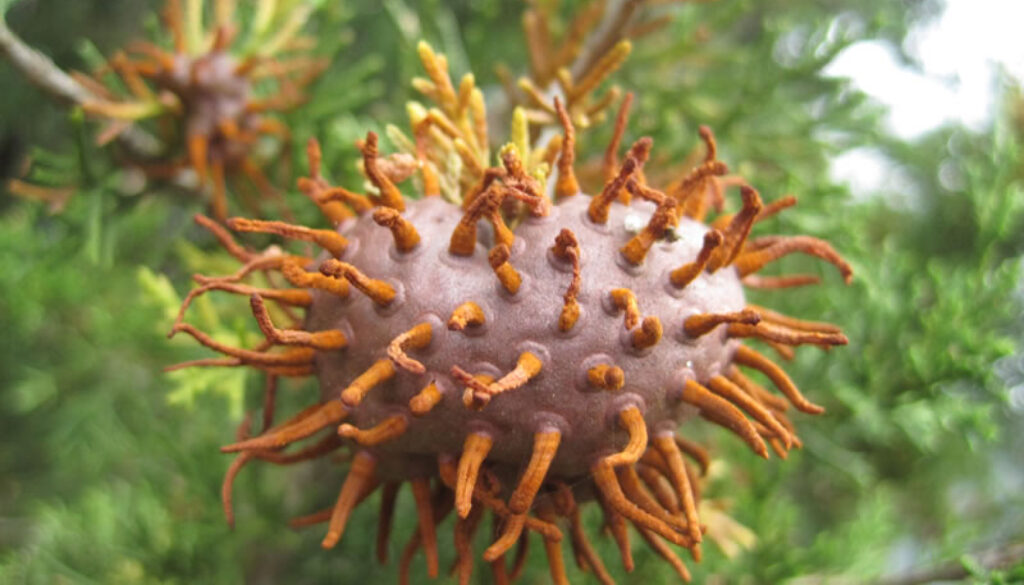
Cedar-Apple Rust is a fungal disease caused by Gymnosporangium juniperi-virginianae that requires two hosts to complete its life cycle: juniper species (like eastern redcedar) and apple/crabapple trees. It appears as brown, kidney-shaped galls on cedars that develop bright orange, jelly-like horns in wet spring weather, releasing spores that infect apple trees, causing yellow spots on leaves and fruit. While it’s not very harmful to junipers, it can cause significant damage to apples, leading to premature defoliation and poor fruit quality.
-
On Cedars:
The fungus lives for nearly two years on junipers or cedars as brown, kidney-shaped galls.
-
Spore Release:
In the spring, when it rains, these galls swell and produce bright orange, jelly-like horns.
-
Infection of Apples:
These horns release spores that are carried by the wind, sometimes for several miles, and land on apple or crabapple trees.
-
Symptoms on Apples:
The spores germinate and infect young apple leaves, fruit, and shoots, leading to yellow, orange, or brown spots and eventually distortion.
-
Return to Cedars:
Spores from the infected apples then blow back to the junipers, completing the cycle and overwintering as small galls.
-
On Cedars:
Brown, kidney-shaped galls that erupt with bright orange, gelatinous horns in spring.
-
On Apples/Crabapples:
- Yellow spots on leaves that turn orange or brown.
- Small, black dots on the undersides of the leaves.
- Yellowish-green spots on fruit that grow larger and turn brown or black.
- Twisted, distorted, or stunted leaves, fruit, and shoots in severe cases.
- Yellow spots on leaves that turn orange or brown.
- Resistant Varieties: Plant apple varieties known to be resistant to cedar-apple rust.
- Fungicides: Apply fungicides to apple trees in early spring before symptoms appear.
- Cultural Practices: Avoid planting apple and juniper trees too close together, as the disease requires both hosts to complete its life cycle.